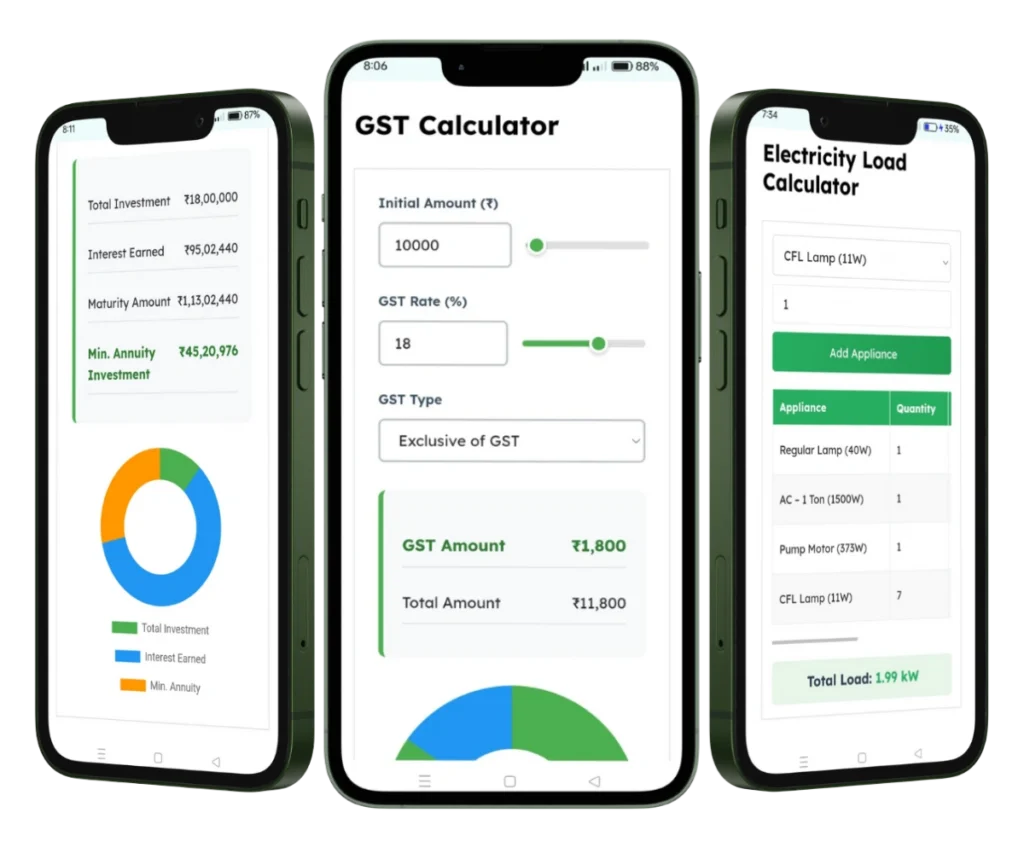
3D Interest Calculator
Calculate Returns for Fixed Deposits and Recurring Deposits
Why Use FD/RD Interest Calculator?
- Accurate planning of your investments and returns
- Compare different investment options easily
- Understand how interest rates affect your savings
- Plan your financial goals with precise calculations
- Save time on manual calculations with instant results
- Make informed decisions about investment tenure
Frequently Asked Questions
Understanding FD and RD Investments
Fixed Deposits (FD) and Recurring Deposits (RD) are among the most popular investment options in India, offering safety, guaranteed returns, and flexibility. While FDs involve investing a lump sum amount for a fixed tenure at a predetermined interest rate, RDs allow investors to deposit a fixed amount every month for a chosen tenure.
Benefits of Fixed Deposits
Fixed Deposits offer higher interest rates than regular savings accounts, with terms ranging from 7 days to 10 years. Senior citizens typically receive an additional 0.25% to 0.50% interest. FDs provide loan facilities against the deposit and can be used as collateral. The interest can be paid out periodically or reinvested, depending on the investor's needs.
Advantages of Recurring Deposits
Recurring Deposits are ideal for salaried individuals who want to save a fixed amount every month. The tenure usually ranges from 6 months to 10 years. RDs instill financial discipline through regular savings and offer similar interest rates to FDs. The minimum deposit can be as low as ₹100 per month in most banks, making it accessible to all income groups.
Tax Implications
Interest earned from both FDs and RDs is taxable under the head 'Income from Other Sources'. If the interest income exceeds ₹40,000 (₹50,000 for senior citizens) in a financial year, banks deduct TDS at 10%. However, if your total income is below the taxable limit, you can submit Form 15G/15H to avoid TDS deduction.
Which is Better: FD or RD?
The choice between FD and RD depends on your financial situation. If you have a lump sum amount, FD might be preferable. If you want to save regularly from your monthly income, RD is more suitable. Consider factors like interest rates, tenure, liquidity needs, and tax implications before deciding.
Recent Trends
With the introduction of tax-saving FDs with a lock-in period of 5 years under Section 80C, many investors are opting for this option to save taxes while earning guaranteed returns. Several banks also offer special FDs for senior citizens with higher interest rates and additional benefits.