Renting vs. Buying a Home: How Our Advanced Calculator Solves the Dilemma
Emi vs Rent decision tool.Friends, when you buy a home, it holds a unique significance. It’s not just for you; your entire family benefits from it. Not only that, but buying a home is bigger than buying most of the things we use. Because buying a home isn’t just about shopping, it’s considered a symbol of your success. It reflects your worth and becomes a hallmark of your financial situation. Furthermore, it also symbolizes your dignity and respect.
Therefore, buying a home is considered a very important decision. It requires careful preparation. If you’re financially prepared, it can be a blessing, but if you don’t plan properly, it can also become a mountain of trouble. Therefore, in today’s post, we’ll explore whether buying a home or renting is the right choice. We’ll use mathematical calculations, inflation, and facts, not emotional considerations.
Because people often say that renting is a waste of money; it’s better to buy a home on loan and pay EMIs instead of rent. It sounds so fitting, doesn’t it? But is it completely true? We’ll find out everything in this blog post.
Advantages and Disadvantages of Buying a Home

You might be thinking that buying a home has many advantages. What are the disadvantages? Yes, it’s true that buying a home has many benefits, and everyone dreams of building their dream home.
And yes, everyone should strive to buy a home for themselves and their family. Because when you own your own home, you have legal property in your name. You can also get a loan from the bank against it in an emergency.
You have a lifelong home. You also feel secure for your children after you pass away. There are many other benefits. But all of this is only possible if you have enough money to buy a home. However, if you don’t have enough money and are looking to buy a home through a loan, you may face some challenges.
1. Loan interest – If you’re buying a home worth ₹50 lakh and make a down payment of ₹10 lakh, and you take it for a 20-year term at 8.5% interest, then after 20 years, you find that instead of paying ₹40 lakh, you’ve paid ₹82 lakh, including interest.
This means you’ve paid almost double the amount. Instead of paying ₹40 lakh, you’ve paid an extra ₹40 lakh.
2. Property Tax and Insurance – Every year, you’ll need to pay property taxes and insurance. The value of your property increases year after year, which you’ll have to pay.
3. Maintenance costs – Every year, even if you don’t want to, you’ll have to pay for maintenance. If you live in a society, you’ll need to pay for elevator maintenance, garden maintenance, house painting, and periodic repairs. All of these will come out of your pocket repeatedly.
Advantages and disadvantages of living on rent.

The biggest disadvantage of renting is that no matter how many years you live in a house, despite paying monthly payments, it will never become yours. In the end, you’re out of money and out of the house.
It feels like a total loss. And as people say, rent money is a waste. That seems to be absolutely true. But this happens to people who aren’t aware of the benefits of renting. If you live in a rented house, you can benefit from rent in two ways.
1. To buy a home worth ₹50 lakh, you’d make a down payment of ₹10 lakh. If you don’t buy the home, you’ll still have ₹10 lakh left.
2. Difference between EMI vs Rent – When you buy a house worth Rs 50 lakh, you get an EMI of around Rs 35,000 per month and when you live on rent in the same area, you pay Rs 15,000 per month as rent, which means you save Rs 20,000 every month.
Now the math begins. You have ₹10 lakh for down payment and ₹20,000 every month that you’ve saved by not buying a home. If you invest these funds in mutual funds or SIPs, you could earn a significant amount of money over the long term through compound interest.
You could earn so much that you could make far more money than the ₹50 lakh you’re buying. This could allow you to buy the entire house later without a loan, without paying ₹40 lakh in interest to the bank. You’ll still have money left over.
You can make this much money if you invest the money you would have saved by buying a house and living on rent. So you see how much profit you can make by living on rent.
A dark truth about renting and buying a house.
When you live on rent, the rent increases by 5% to 8% every year due to inflation, that is, where you are paying Rs 15,000 today, after 10 years you will have to pay Rs 26,000 per month.
And if you bought a home thinking that your money will double every year in real estate, this isn’t entirely true; it depends on many factors. Otherwise, it typically increases by 4% to 6%, which is roughly equal to the inflation rate. So, keep these things in mind.
Should I stay on rent or buy my own house?
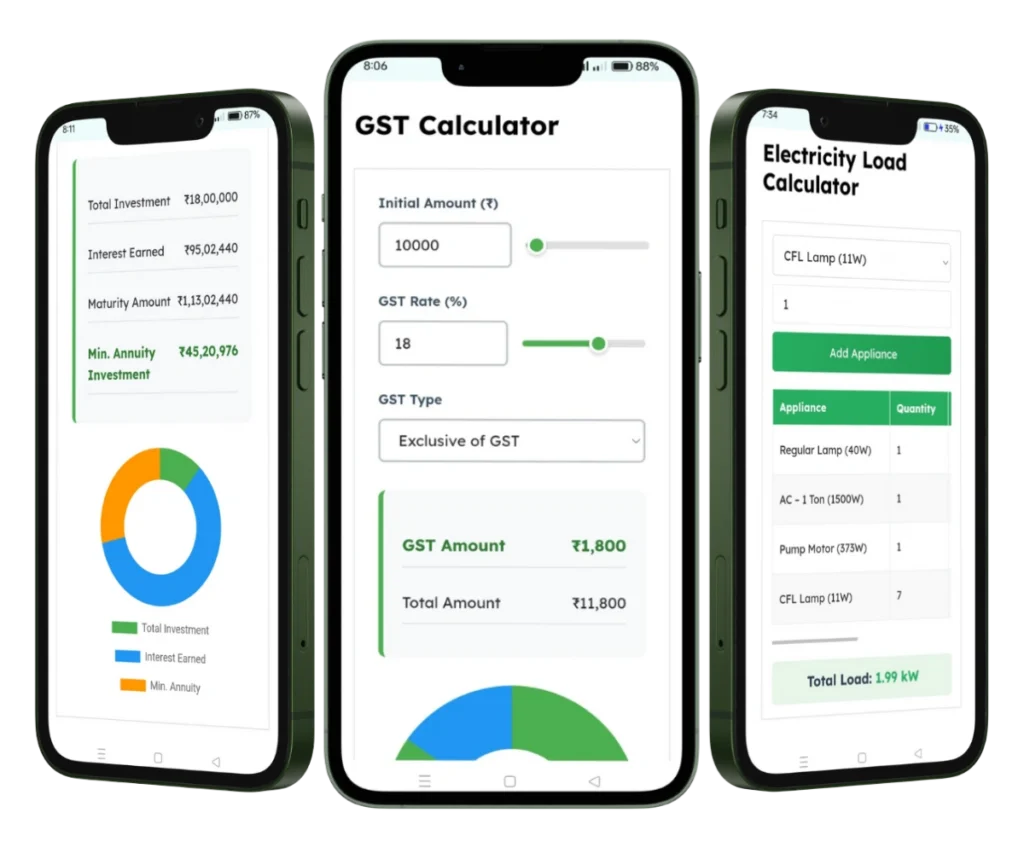
What’s right for you? We’ve created an online tool for this purpose on the toolist website. This tool will perform any complex calculation for you, free of charge, in just one click.
All you need to do is provide the correct data requested. This tool will tell you whether renting is the best option for you or whether you should buy your own home. It will calculate your EMI, rent, and inflation to tell you what’s right for you.
However, let me tell you a general decision you should make.
You should buy a home.
1. If you have to live where you are living for 10-15 years.
2. If you are afraid of investing and can’t invest with discipline.
3. You have enough money for the down payment. And even after making the down payment and paying EMIs, you don’t have any problem with the emergency fund.
You should rent if you
1. Your job location isn’t fixed, or the job itself isn’t fixed. You can change jobs or locations at any time. 2. The area you’re looking for a home has high house prices, but the rent is very cheap. 3. You think you can save money and earn 12% interest through SIPs or mutual funds.
Comment below do you like EMI vs Rent decision tool.